Camping With Dogs: Everything You Need To Know for a Stress-free Trip
Camping is one of my favourite ways to make memories as a family, and that includes bringing our dogs along for the adventure. There’s nothing quite like watching them explore new trails, nap by the campfire, or happily sniff absolutely everything in sight.
That said, camping with dogs does take a little extra planning. Forgetting something as simple as a long leash or enough water can quickly turn a relaxing weekend into a stressful one.
After years of camping with our two huskies, we’ve learned what makes a trip enjoyable for both humans and dogs. In this guide, I’ll walk you through everything we do before leaving home, what we pack, and how we keep everyone safe and comfortable at the campsite.
Is your dog ready for camping?
Not every dog enjoys camping, and that’s okay.
Before planning a trip, think about your dog’s personality, energy level, and training. Dogs that are comfortable around strangers, can settle while relaxing at the campsite, and reliably come when called tend to adjust more easily.
If this is your dog’s first camping trip, consider starting with a single overnight close to home instead of committing to a full week in the wilderness.
You should also make sure your dog is healthy enough for hiking, swimming, and spending long periods outdoors. If they’re older or have medical conditions, it’s worth discussing your plans with your veterinarian beforehand.
Bonus Tip: Engage, Disengage is a great training exercise to do in preparation for camping. It involves taking your dog close enough to a trigger (like strange people, other dogs, or animals) that they notice it but not close enough for them to get overly excited by it. The first level you will click or use a praise word when they look at the trigger and follow that up with a high value reward. Once they are comfortable with that you can move to level two, where you wait for them to look at the trigger and then at you before you click and reward. If your dog can play this game in different locations and distances from triggers, there’s a good chance they won’t have an issue with strange people and dogs at the campsite.
What to Pack for Your Dog
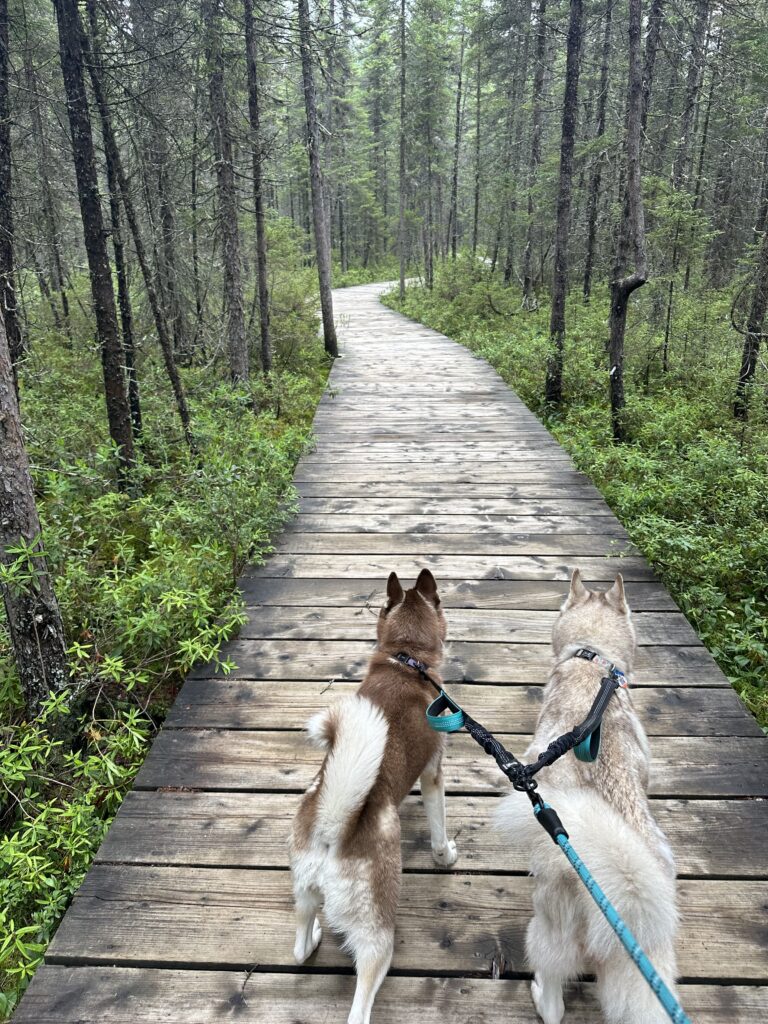
I like packing our dogs almost like I pack the kids. Having everything organized before we leave means I’m not scrambling to find supplies once we’re at the campsite. We keep all of our dogs camping gear in a small plastic tote. Before a trip we just add food, treats, harnesses and leashes and then bring the bin. Having all the dog stuff together makes it easy to find what we need.
Here is a sample packing list:
Essentials:
- Food (pack enough for each day plus a few extra days)
- Bowls
- Extra water
- Treats
- Leash
- Long line
- Harness
- Collar with ID
- Poop bags
Sleeping:
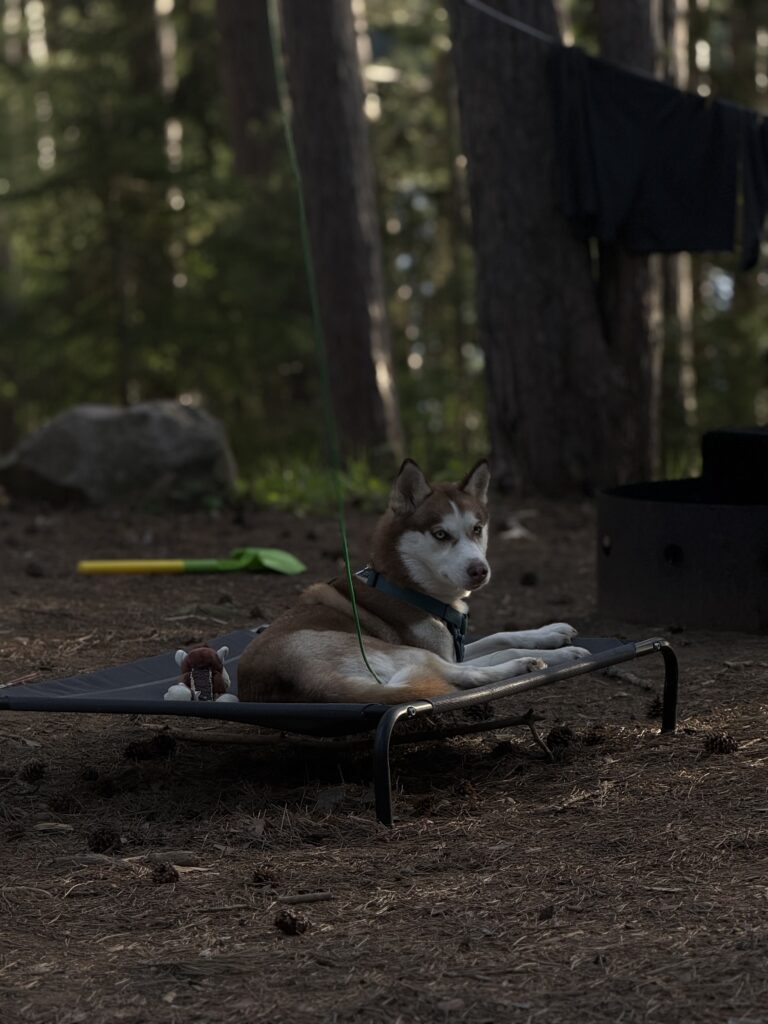
- Dog bed
- Blanket
- Toy
- Towel
- Crate
Safety:
- First aid kit
- Tick remover
- Medications
- Flashing collar/light
- Reflective gear
Extras:
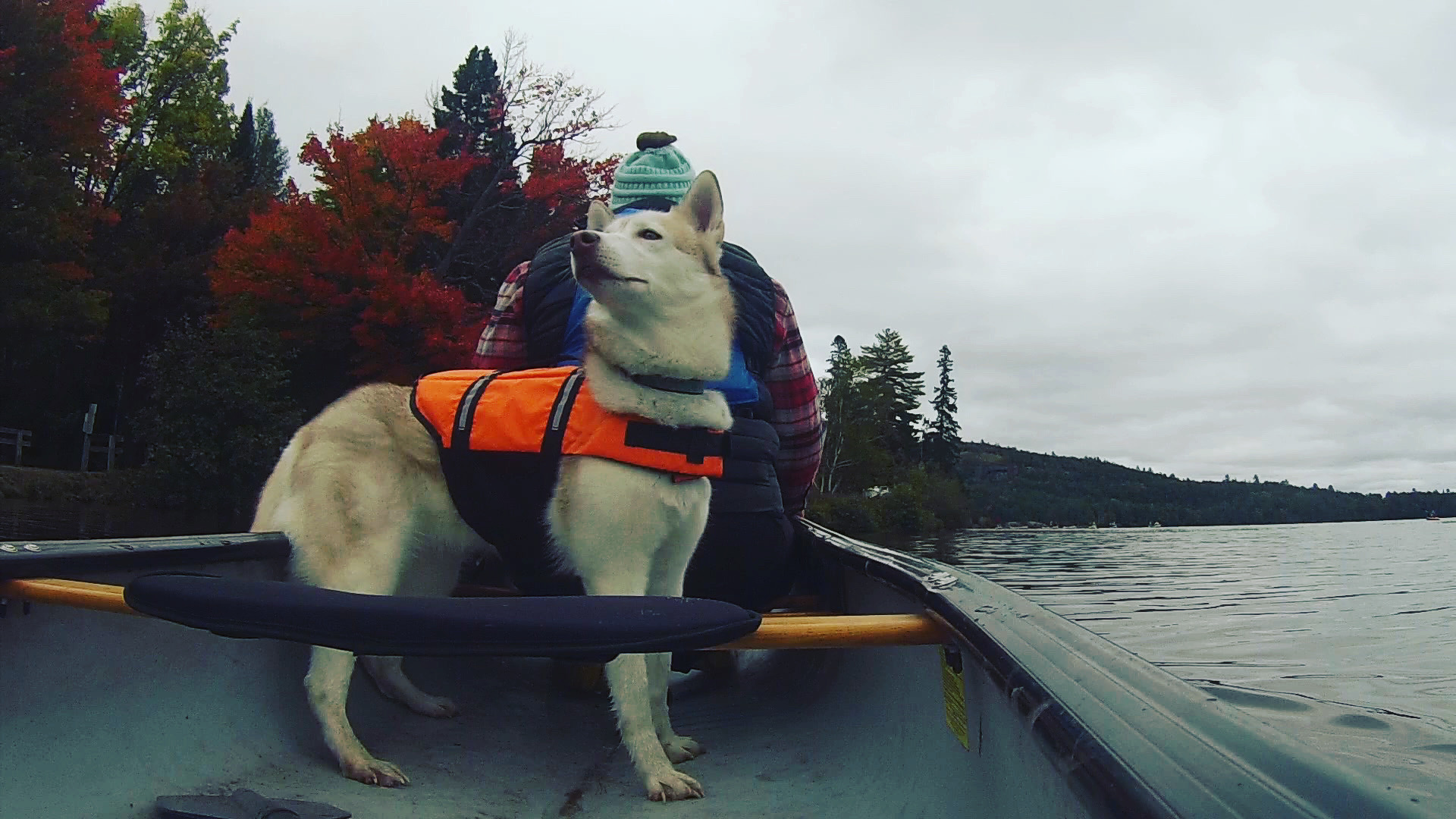
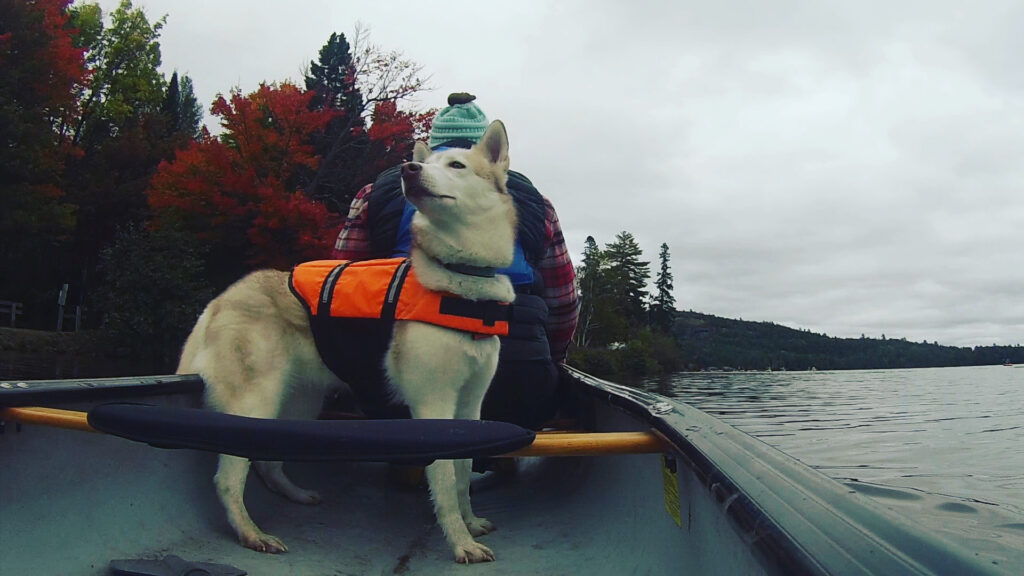
- Life jacket
- Rain jacket
- Booties
- Tie-out or high line kit
- Cooling mat
Bonus Tip: Keep a long line for each dog easily accessible so you can tie them off while you set up camp. Fussing with leashes while digging out supplies is no fun!
Preparing Before you Leave
A little preparation goes a long way!
In the days leading up to your trip:
- Make sure vaccinations are up to date
- Check flea and tick prevention
- Refill any medication
- Save the location of the nearest emergency vet
- Confirm dogs are allowed at your campground and review the pet rules
If your dog isn’t microchipped or wearing identification tags, now is the perfect time.
Setting up a Dog-Friendly Campsite
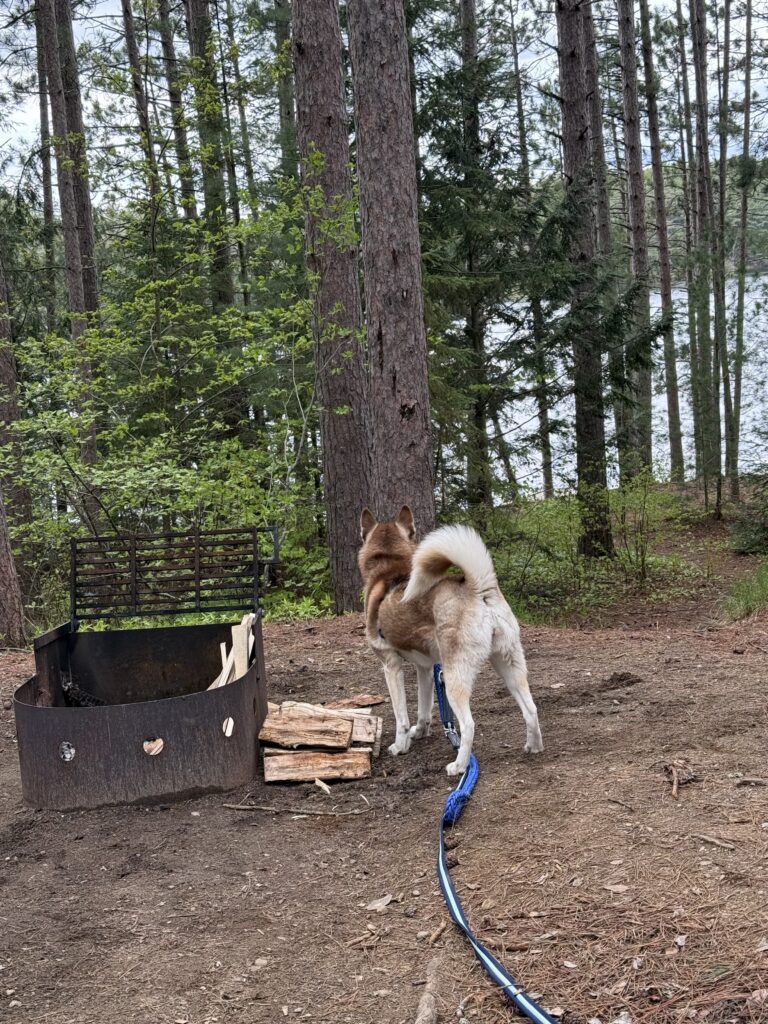
Once you arrive take a few minutes to help your dog settle in. We like to give our dogs a few minutes to sniff around the campsite before unloading everything. It helps satisfy some of their curiosity and helps them stay calmer while we’re setting up.
Choose a shaded area for their bed, always provide fresh water, and don’t leave food out where it will attract wildlife.
If your campground allows tie-outs, make sure your dog has enough room to move comfortably without reaching other campsites or getting tangled on picnic benches or trees. My favourite method for tie-outs is with a high line strung between trees. It gives our dogs more freedom to move without dragging a line on the ground, and they get tangled way less often.
Bonus Tip: consider your dog’s personality when laying out your campsite. If they’re likely to become overly excited or stressed seeing people or animals at other sites you can strategically position vehicles, tents, campers or even tarps to break the sight lines and give your dog a relaxing place to hang out.
Campground Etiquette
Camping is more enjoyable when everyone is respectful.
Even if your dog is friendly, not everyone is comfortable around dogs. Keep them leashed unless you’re in a designated off-leash area and they have a solid recall, clean up after them promptly, and do your best to prevent excessive barking.
Be especially mindful early in the morning or later in the evening when other campers may be sleeping.
Keeping Your Dog Safe
The outdoors brings new risks.
Watch for:
- Heat exhaustion
- Dehydration
- Wildlife encounters
- Sharp ricks
- Campfires
- Fishing hooks
- Human food
- Toxic plants or mushrooms
- Blue-green algae in lakes
After hikes, check your dog carefully for ticks, burrs, cuts or sore paws.
Bonus Tip: A strong “leave it” command can go along way towards keeping everyone safe. Particularly when it comes to wildlife encounters or toxic flora. The first time we took one of our dogs camping we had an encounter with a bull moose. The moose was going to run past us but my dog barked and he stopped and considered approaching us. Thankfully he decided to continue on instead otherwise that could have become a very dangerous situation!
Hiking and Exploring Together
One of the best parts of camping with your pets is exploring together!
Bring extra water , take frequent breaks, and let them set the pace if temperatures are warm.
Remember that dogs can tire much faster on rough or uneven terrain than they do at home on a walk around an urban environment!
Sleeping at Night
Some dogs settle quickly. Others may spend the first night listening to every squirrel, raccoon, and mysterious forest sound. It’s completely normal for your dog to be more alert than they are at home.
Keeping their usual blanket or bed can make a big difference. We also try to stick to their usual bed time routine as much as much as possible so they know when it’s time to relax. If your dog has lots of energy, consider a long evening walk around the campground to tire them out before bed.
Before turning in for the night, keep their leash, a flashlight, and plastic bags within easy reach in case of late night potty breaks. And while it might be tempting to leave them outside on a tie-out overnight, it’s safest to have your dog sleep with you in your tent or camper.
Common Mistakes to Avoid
- Forgetting extra food
- Assuming every campground is dog friendly
- Leaving dogs unattended
- Not bringing enough water
- Letting them off leash
- Skipping tick checks
- Not packing enough towels
- Feeding campfire scraps
Frequently Asked Questions
Can dogs sleep in a tent?
Yes. It’s safest for your dog to sleep wherever you are sleeping. It helps to keep your dog’s sleep set up as close to the same as at home as possible. For my two huskies, they are crate trained and sleep in their crates at night. We bring a larger tent when we tent camp and bring their crates with us. It helps keep them settled at night, and reduces the chances of them making a break out the tent door if a human family member needs a late night potty break! Keep in mind though that tent temperatures can rise fast on summer mornings, don’t leave your dog in the tent during the day.
Can dogs sleep in a camper/RV?
Yes! Now that we have kids we typically bring a camper rather than renting it and our dogs still often come with us. We don’t have space for their crates in the camper so we typically put their beds in the shower or on the bathroom floor so they can still have their own separate sleeping space at night. Just like in a tent, a camper can get very warm during the day when the sun is up, if it’s uncomfortable for you, it’s too hot for your dog. It may also be tempting to leave your dog in camper or RV while you go on adventures, don’t do it! Your dog is safest wherever you are. If you leave them there alone you aren’t able to monitor temperature and if there is an emergency such as a fire, you don’t want to be trying to get back to your dog instead of evacuating.
What if my dog barks all night?
Dogs bark, and while a few barks here and there are unavoidable and on a first night a pup who’s new to camping may bark a little more while they settle in, not every dog is suited to or likes camping. If your dog is barking all night, they aren’t happy, you are probably stressed, and other campers around you aren’t having a good time either. Consider cutting your trip home and doing some more practice at home before taking your pup camping again.
Can dogs swim while camping?
Yes but make sure you check the rules for your campground. Some campgrounds have specific beaches for the dogs and most do not allow dogs to swim at the regular people beaches. You should also keep an eye on the water quality and discuss with your vet and specific vaccinations or preventions for your area as some water can carry bacteria or parasites that can make your dog sick.
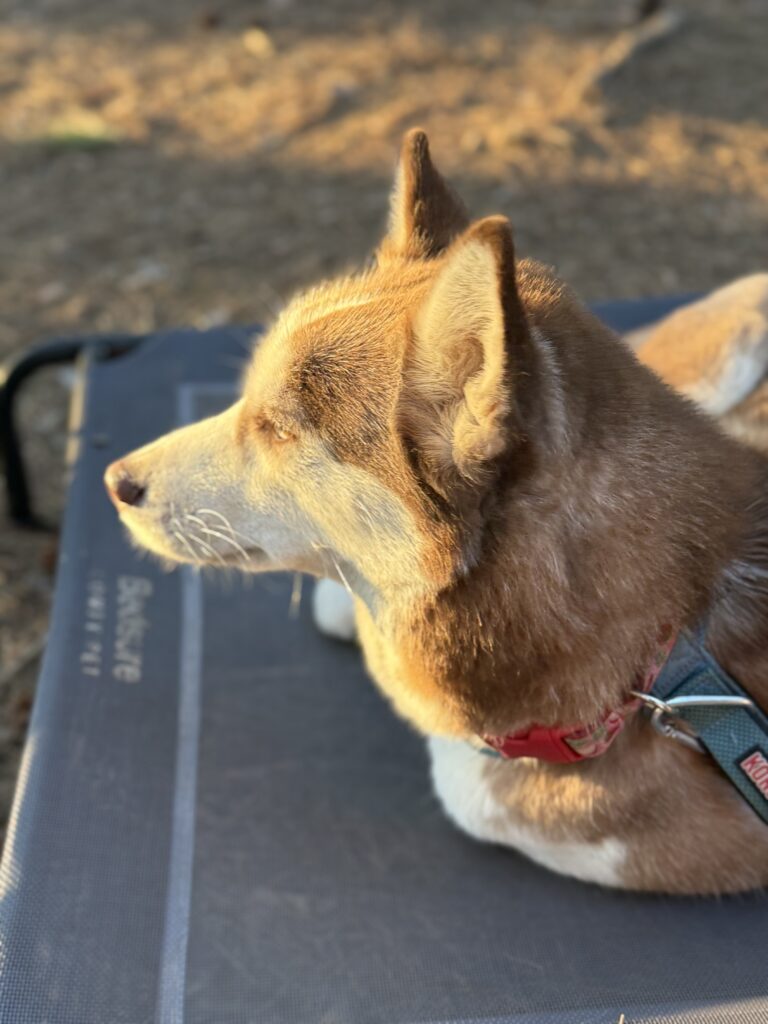
Camping with dogs might require a little more planning, but for us it’s always worth it. Watching them experience new places, curl up beside the fire after a long day of exploring, and become part of our family adventures is something I wouldn’t trade for anything.
With the right preparation and a little flexibility, your dog can become one of your favourite camping companions. Start small, pack thoughtfully, and before long you’ll both be looking forward to your next adventure together.
Are you planning a camping trip? Check my guide for Camping Meal Planning for Families!